Branding · 9 min read
B2B branding: how to build a brand that buying groups trust and remember
B2B buyers decide in groups, over months, and most of them are not shopping today. Here is what B2B branding is, what the research says about it, and a practical plan to build a brand that makes the sale easier.

Jakaria MahmudBrand strategist and brand identity designer ·
B2B branding is how a company that sells to other businesses becomes known, understood and trusted by the people who buy from it. It covers positioning, messaging, proof and a visual identity that works across the website, sales decks, proposals and product. In B2B the buyer is usually a group, the sale takes months and most potential buyers are not in market today, so a strong brand does two jobs: it keeps you remembered until they are ready, and it makes the decision feel safe when they are.
I am Jakaria Mahmud, a brand identity designer who also leads sales and business development, and most of my clients sell to other businesses: fintech, construction, logistics, energy and technology companies. This guide explains B2B branding from both sides, what the research says and how to build a B2B brand step by step.
Short answer. Build a B2B brand around one clear position for one kind of customer, back every claim with proof, design an identity system that works in decks and proposals as well as on the website, and show up consistently before buyers are in market. Research from the LinkedIn B2B Institute suggests only about 5% of B2B buyers are in market at any one time, so being remembered matters as much as being chosen.
What is B2B branding?
B2B branding is the work of shaping how business buyers see a company before, during and after a purchase. It includes:
- Positioning: who you serve, the problem you solve and why you win against the alternatives. See how to write a brand positioning statement.
- Messaging: the headline, value proposition, proof points and answers to common objections.
- Proof: case studies, client names, numbers, certifications and reviews that make claims believable.
- Visual identity: logo, colour, typography, imagery and layouts. See what brand identity is.
- Sales tools: the website, pitch deck, proposal and one pagers that carry the brand into every deal.
A logo is only one part of it. Read logo vs brand identity if you are unsure where the line is.
How B2B branding differs from B2C branding
The principles are the same, but the buyer and the risk are different, so the brand has to work in different places.
| Factor | B2B branding | B2C branding |
|---|---|---|
| Who decides | A buying group with different roles and concerns | Usually one person or a household |
| Sales cycle | Weeks to months, often with a formal review | Minutes to days |
| Main risk for the buyer | Choosing a supplier that fails and reflects badly on them | Wasting money on a product they do not like |
| What builds trust | Proof, clarity, consistency and people | Emotion, experience and social proof |
| Where the brand works | Website, decks, proposals, product, LinkedIn, events | Packaging, ads, social, stores, apps |
B2B brands still need emotion. The buyer is a person who wants to feel confident, look smart to colleagues and avoid a bad decision. A clear, consistent brand reduces that fear.
What the research says about brand building in B2B
Three findings are worth knowing before you plan a B2B brand:
- Most buyers are not in market today. Research by Professor John Dawes of the Ehrenberg-Bass Institute for the LinkedIn B2B Institute led to the 95:5 rule: only about 5% of B2B buyers are in market at any given time, and 95% are out of market. The practical lesson is to build memory with future buyers, not only chase the few who are ready now.
- Brand and activation work together. In The 5 Principles of Growth in B2B Marketing, published by the LinkedIn B2B Institute in 2019, Les Binet and Peter Field found B2B businesses grew best with about 46% of budget on brand building and 54% on activation, and that emotional, distinctive work drove longer term effects.
- Buying groups are large and use AI to research. Forrester's State of Business Buying 2026, reported by Digital Commerce 360, found an average of 13 internal stakeholders and 9 external participants in a purchase, with generative AI tools the most cited way buyers researched purchases in its 2025 survey.
Together these point to the same conclusion: a B2B brand has to be easy to remember, easy to explain to colleagues and easy for search engines and AI tools to understand. For the revenue side of the argument, read how branding increases sales.
What a strong B2B brand needs
A position the whole buying group can repeat
Each person in the buying group asks a different question. Finance asks about cost and risk, the user asks if it works, and the sponsor asks if it will make them look good. One clear position with tailored proof for each role keeps the story consistent when your champion retells it internally.
A proof system, not just claims
Case studies with real outcomes, client names you are allowed to use, certifications, process details and reviews. Put proof next to every important claim, on the website and in the deck.
An identity built for documents
B2B brands live in PDFs, slides, proposals, dashboards and email signatures as much as on the homepage. Design the type, colour, grid and charts so they work in those formats, then lock them into brand guidelines and templates.
A website built for research
Buyers read before they talk to sales. Clear service pages, pricing signals, case studies and direct answers to common questions help them and help search and AI tools describe you correctly. If your site gets visits but few enquiries, see why business websites do not convert.
Consistency over time
The same colours, phrases and visual codes, repeated for years, are what make a brand memorable to the 95% who are not buying yet.
How to build a B2B brand in 7 steps
- Talk to customers and lost deals. Ask why they chose you, what nearly stopped them and who else was involved. Lost deals are often more useful than wins.
- Map the buying group. List each role, what it cares about and what proof it needs.
- Audit your brand and competitors. Check how you look and sound against the alternatives. A brand audit checklist helps.
- Write the positioning and messaging. One positioning statement, a value proposition, proof points and objection answers, agreed in writing.
- Design the identity system. Logo, colour, type, imagery, charts and document layouts that express the position. Follow a clear brand identity design process.
- Build the sales tools. Website pages, a pitch or sales deck, proposal templates and case study layouts.
- Roll out and repeat. Train the team, update every touchpoint and keep the codes consistent. Review once a year, not every quarter.
B2B branding for search and AI answers
Because more buyers now research with AI tools, your brand facts need to be clear and consistent everywhere: what you do, who for, where you work, your prices or price signals and your proof. Write direct answers on service pages, keep your name, services and locations the same across your website, LinkedIn and directory profiles, and publish case studies with specific details. AI tools can only repeat what they can find and understand.
B2B branding in practice: examples from my work
A few of the B2B identities I have designed, each with a full case study:
- Fintech: MYPA and OneClick, where trust and clarity mattered more than flash. More in the fintech branding guide.
- Construction and infrastructure: INGLIS Contractors in the UK and Metrix, built to work on site boards, vehicles and bids. See the construction branding guide.
- Logistics: MasBriX, from the logo to vehicle graphics. Read the logistics branding guide.
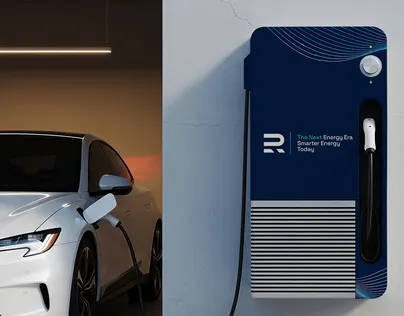
- Energy: R-Load EV charging. See renewable energy branding.
6 common B2B branding mistakes
- Describing features instead of the business outcome the buyer cares about.
- Talking only to the end user and ignoring finance, procurement and leadership.
- Using the same blue gradient, stock handshake and vague slogan as every competitor.
- A polished website but untidy decks and proposals, where deals are actually decided.
- Claims without proof, such as "industry leading" with no numbers, names or cases.
- Changing the look every year, which resets the memory you were building.
What B2B branding costs
Costs depend on scope, from a positioning brief and logo to a full identity, website and sales materials. For market price ranges, see the guides to brand identity design costs in the USA and branding costs in the UK. With me, the Launch plan is $799 one time for a positioning brief, logo, brand starter kit and one landing page, and full brand strategy, identity, guidelines and website sit in the Partner plan at $1,999 per month.
Where I fit: Jakaria Mahmud
I build brands with a business mindset. Because I lead sales and business development as well as design, I start B2B projects with the objections buyers raise in real deals, then design the position, identity and sales tools that answer them. I work with B2B companies in the USA, UK, Australia and Norway, and see my brand identity design, brand strategy and brand consulting services for how that works.
Research and sources
- Peter Weinberg and Jon Lombardo, Marketing Week, The 95:5 rule is the new 60:40 rule, on research with Professor John Dawes of the Ehrenberg-Bass Institute for the LinkedIn B2B Institute.
- LinkedIn B2B Institute, How B2B marketing really drives growth, on Les Binet and Peter Field's The 5 Principles of Growth in B2B Marketing, 2019.
- Digital Commerce 360, Forrester on B2B buying and AI in 2026, reporting Forrester's The State of Business Buying, 2026.
B2B brands I designed: MYPA, INGLIS Contractors and MasBriX.
The takeaway
B2B branding is not decoration. It is how a buying group understands you, remembers you and defends the decision to choose you. Pick one clear position, prove it, design an identity that works in the documents where deals happen and stay consistent long enough to be remembered.
Want help building a B2B brand? See brand identity design, compare plans and pricing or book a free 30 minute call.
Frequently asked questions
B2B branding is how a company that sells to other businesses shapes the way buyers see it. It covers positioning, messaging, proof such as case studies, a visual identity and sales tools like the website, pitch deck and proposals, so that buying groups understand, remember and trust the company.
B2B brands sell to buying groups over longer sales cycles where the risk of a bad choice is high, so they rely more on clarity, proof and consistency across websites, decks and proposals. B2C brands usually sell to individuals who decide faster and lean more on emotion and experience.
Research for the LinkedIn B2B Institute suggests only about 5% of B2B buyers are in market at any time, so a brand that is remembered before buyers are ready is more likely to make the shortlist. A clear, consistent brand also makes the decision feel safer for the buying group.
A focused positioning brief and starter identity can take one to two weeks. A full B2B brand with strategy, identity, guidelines, website and sales materials usually takes several weeks, and building recognition in the market takes consistent use over months and years.
A logo system, colour palette, typography, imagery style, chart and data styles, document and slide templates, and brand guidelines, all designed to express a clear positioning and to work in proposals, decks and the product as well as on the website.
It depends on scope. With Jakaria Mahmud, the Launch plan is $799 one time for a positioning brief, logo, brand starter kit and one landing page, and full strategy, identity, guidelines and website are part of the Partner plan at $1,999 per month.