Branding · 7 min read
Fitness and wellness branding in 2027: how gyms, studios and wellness brands build trust and fill memberships
Gyms, studios, trainers and wellness brands all promise better health, so people choose the one they trust and feel they belong to. Here is how to build a fitness or wellness brand in 2027, what it costs and real examples.

Jakaria MahmudBrand strategist and brand identity designer ·
Fitness and wellness branding is how a gym, studio, trainer, wellness program or product brand shows people who it is for, why it is different and why they can trust it. In 2027 people compare options on Instagram, Google Maps, review sites and AI assistants before they ever walk in or buy. Most of those options promise the same result, so the brand that feels clear, credible and like the right community is the one that gets the trial, the membership and the referral.
I am Jakaria Mahmud, a brand identity designer. I have designed fitness, wellness and health tech brands, including Anchor, New Leaf Vitality and Strivn. This guide is the approach I use.
Short answer. A fitness or wellness brand needs a clear audience, one strong idea, a simple logo that works on equipment, apparel and an app icon, a colour palette that matches the energy you sell, honest photography of real people, and the same voice across your space, website, booking flow and social. Expect about $800 to $5,000 for a trainer or small studio identity and $5,000 to $20,000 for a gym or wellness brand with a full system in 2027.
Why fitness and wellness branding matters more in 2027
- Everyone promises results. Stronger, calmer, healthier. When the promise is the same, people choose the brand they trust and relate to.
- Discovery starts online. Maps listings, reviews, short videos and AI answers decide who gets the first visit. A consistent name, logo and description across platforms helps you get found and recognised. See how to get recommended by AI search.
- Apps and digital programs compete with local gyms. Your brand has to work as well in an app icon and a booking screen as on a wall.
- Community keeps members. People stay where they feel they belong. A strong brand gives members something to wear, share and be proud of.
- Trust is under pressure. Buyers are more careful with health claims. A calm, honest brand earns more trust than loud promises.
Who this guide is for
- Gyms, CrossFit boxes and strength clubs
- Boutique studios: yoga, pilates, cycling, boxing and HIIT
- Personal trainers and online coaches
- Wellness programs, retreats and apps
- Fitness accessories, apparel and supplement brands
- Health tech and performance brands
Clinics and medical practices have extra trust and compliance needs. For those, see healthcare branding.
The 7 parts of a strong fitness or wellness brand
1. A clear audience and position
"Everyone who wants to get fit" is not an audience. Busy professionals, beginners over 40, competitive lifters or new mothers each need a different brand. Write it down with the positioning statement template.
2. One strong idea
Strength, calm, growth, community or performance. Pick one and let every design decision support it.
3. A simple, tough logo
Fitness logos live on dumbbells, mats, bottles, shirts, wall graphics and app icons. They need bold shapes that survive embroidery, printing on fabric and tiny screens. See types of logos.
4. Colour that matches the energy
High contrast black, white and one bold accent feel intense and performance focused. Soft greens, sand and warm neutrals feel calm and restorative. See how to choose brand colours.
5. Honest photography
Real members, real coaches and your real space build more trust than perfect stock models. Set simple photo rules for light, angles and editing.
6. A voice that motivates without overpromising
Encouraging, direct and specific. Avoid medical claims you cannot back up. See how to define your brand voice.
7. A system for every touchpoint
Signage, class schedules, membership cards, merchandise, social templates, the booking flow and the app. Templates keep it consistent when the team posts every day. Use the brand guidelines checklist.
Fitness and wellness brand examples
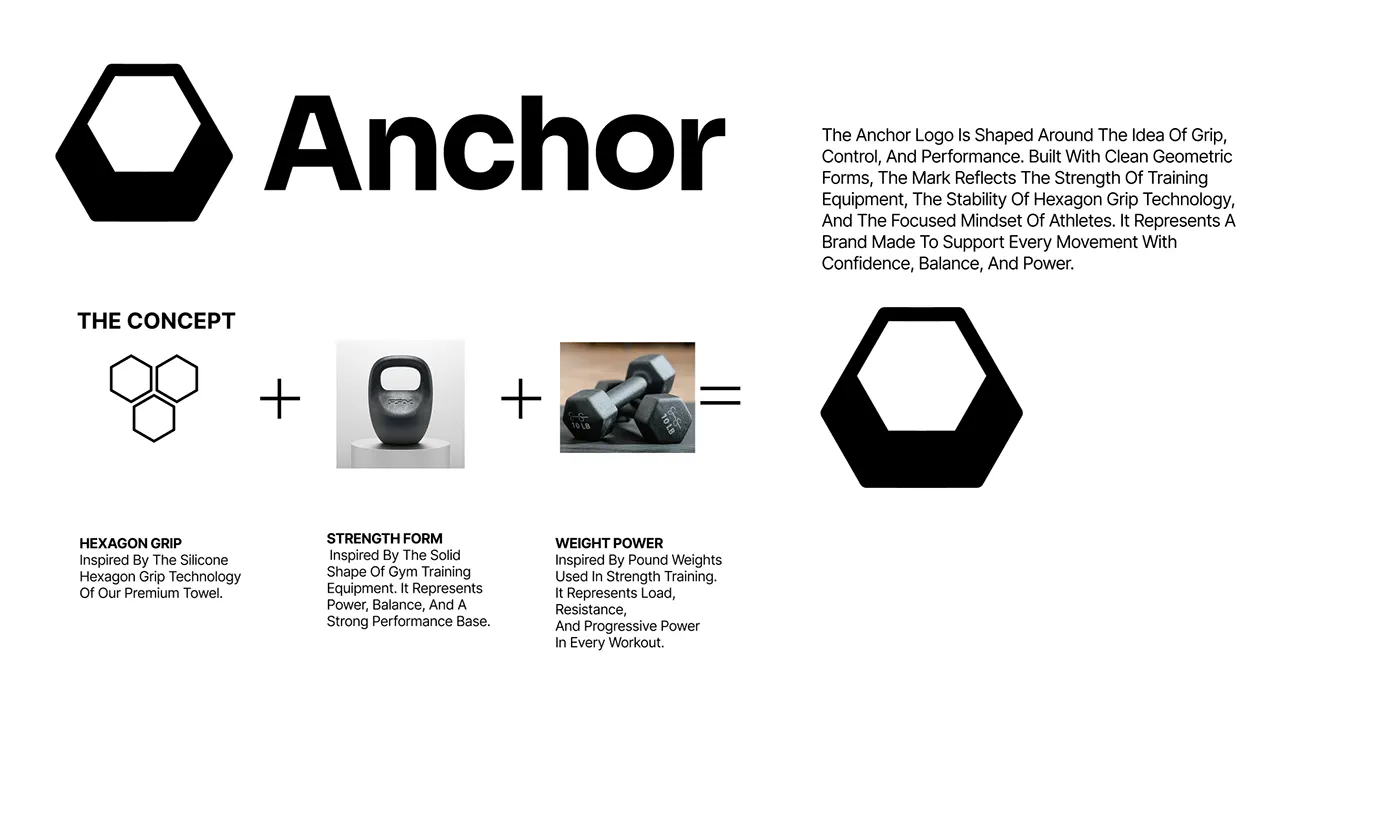
Anchor: a performance brand built for gear
Anchor is a premium fitness accessories brand. The hexagon mark comes from grip texture and gym weights, so it feels strong and works embossed on mats, printed on towels and as an app icon. The lesson: design the logo for the product it will live on. See Anchor fitness branding.
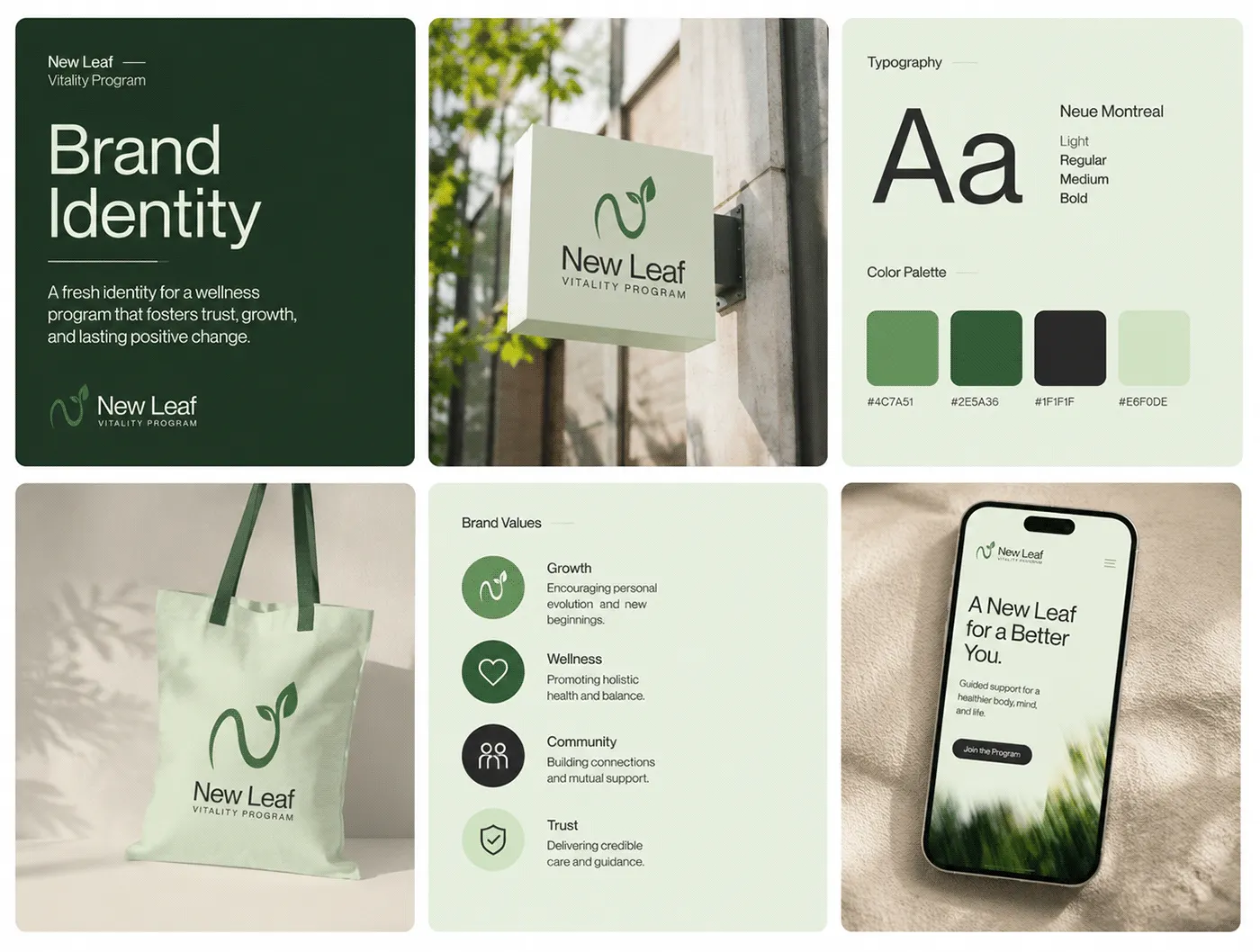
New Leaf Vitality: calm, trustworthy wellness
New Leaf Vitality is a wellness program for healthier living. A simple leaf symbol and a calm green palette make it feel approachable for all ages, from an outdoor sign to a mobile app. The lesson: wellness brands win on calm and trust, not intensity. See New Leaf Vitality.
Strivn: health tech for performance
Strivn is a health tech brand for equine performance. Its identity balances science and care, so the data feels credible and the brand still feels warm. The lesson: health tech needs clarity first. See Strivn.
What fitness and wellness branding costs in 2027
| Business | What you get | Typical budget |
|---|---|---|
| Personal trainer or small studio | Logo, colours, type, social templates, simple signage | $800 to $5,000 |
| Gym, boutique chain or wellness brand | Full identity, merchandise, signage, app and web direction, guidelines | $5,000 to $20,000 |
| Multi location brand or product range | Strategy, identity system, packaging, environmental design, campaign templates | $20,000+ |
Signage, fit out, printing and merchandise production are extra. My pricing is public: the Launch plan is $799 one time for a logo and starter brand kit, the Partner plan is $1,999 a month for full identity and ongoing design such as social, signage and merchandise, and the Growth plan is $3,999 a month and adds sales systems, lead generation and advanced SEO. For product brands, see what packaging design costs and ecommerce branding in 2027.
Building trust in a health related brand
- Show real people and real results carefully. Use member stories with permission and avoid promises nobody can guarantee.
- Show qualifications. Coach certifications, partnerships and years of experience belong on the website and booking pages.
- Collect reviews. Ask happy members for Google reviews and reply to every one.
- Be clear about prices and cancellation. Hidden fees damage a brand faster than a weak logo.
- Keep claims honest. If you sell supplements or programs, check what you are allowed to say in each market.
Fitness and wellness brand launch checklist
- Positioning statement and one clear brand idea
- Logo system: primary, icon, light and dark versions, embroidery friendly version
- Colour palette, fonts and photo rules
- Website with booking, prices, coaches and reviews
- Google Business Profile with the same name, logo, hours and photos
- Social templates for classes, results, events and offers
- Signage, wall graphics and schedule boards
- Merchandise members actually want to wear
- Short brand guidelines for staff and partners
For the full launch plan, see the startup branding checklist and small business branding.
Fitness branding mistakes to avoid
- Copying the biggest gym in town. If you look like them, people compare you on price.
- Thin, detailed logos. They disappear on fabric, equipment and app icons.
- Stock photos of models. People want to see who they will train with.
- Different looks on every channel. The wall, the website and Instagram should feel like the same place.
- Loud claims, quiet proof. Reviews and real stories beat promises.
Fitness, wellness and health brands I designed: Anchor, New Leaf Vitality and STRIVN.
The takeaway
In 2027 fitness and wellness brands win on clarity, trust and community. Pick one audience and one idea, design a simple and tough logo system, use honest photography and a voice that motivates without overpromising, and keep every touchpoint consistent from the front desk to the app.
Building or refreshing a fitness or wellness brand?
I design brand identities for gyms, studios, wellness programs and fitness products in the USA, UK, Australia and worldwide, with fixed prices and every file yours. See brand identity design, logo design and small business branding, then book a free 30 minute call.
Frequently asked questions
Fitness branding is the positioning, logo, colours, photography, voice and touchpoints that make a gym, studio, trainer or fitness product clear, trustworthy and recognisable, so the right people choose it and stay.
Typical budgets are $800 to $5,000 for a personal trainer or small studio, $5,000 to $20,000 for a gym or wellness brand with a full system, and $20,000 or more for multi location brands or product ranges. Signage, printing and merchandise are extra.
A good fitness logo is bold and simple so it works on equipment, apparel, signage and app icons. It reflects one clear idea such as strength, calm or community, and has light, dark, icon and embroidery friendly versions.
Calm wellness brands often use soft greens, sand and warm neutrals, while performance fitness brands use high contrast black, white and one bold accent. The right choice depends on the energy you want people to feel.
By showing real members and coaches, sharing qualifications, collecting and replying to reviews, being clear about prices and cancellation, and avoiding health claims they cannot back up.
Yes. I have designed fitness, wellness and health tech brands including Anchor, New Leaf Vitality and Strivn, for clients in the USA, UK, Australia and worldwide. 80+ clients across 12 countries, rated 5.0 on Google from 6 reviews.