Branding · 9 min read
Luxury branding in 2027: how to build a luxury brand identity people want to pay for
Luxury buyers now pay for craft, quality and meaning, not loud logos. Here is what luxury branding is in 2027, the five layers of a luxury brand identity, real examples and a step by step plan.

Jakaria MahmudBrand strategist and brand identity designer ·
Luxury branding is the strategy, identity and experience that make people believe a product is worth far more than it costs to make. In 2027 that belief comes less from big logos and more from a clear story, restraint, real craft and an experience that feels the same in every place the brand appears. This guide shows what that means in practice, with real luxury brand identity examples and a plan you can follow.
I am Jakaria Mahmud, a brand identity designer who has worked with 80+ clients across 12 countries. My luxury work includes Le Bouket, a floral and lifestyle boutique, Goldmark, Lacio and the FOREON golf club. Everything below comes from that work and from the latest luxury market research.
Short answer. Luxury branding means building a brand people value for its meaning, quality and feeling, not its price tag. A luxury brand identity usually has a refined wordmark or monogram, a small, deep colour palette with one rich accent, elegant serif type, generous space, premium packaging and a calm, confident voice. In 2027 the brands that win show craft and value clearly, because buyers walk away from prices they cannot justify.
What is luxury branding?
Luxury branding is how a premium business shapes what people think and feel about it, so they see it as rare, beautiful and worth paying more for. It covers positioning, story, visual identity, packaging, the shopping experience and the way the brand talks. A logo alone is not luxury branding. The feeling comes from many small, consistent decisions.
Luxury branding also differs from premium branding. A premium brand is a better version of an everyday product. A luxury brand sells something people want for its own sake: heritage, craft, beauty or status. Many boutiques, hotels, florists, jewellers and fashion labels sit between the two, and the identity should be honest about where the business really is.
Why luxury branding matters more in 2027
The luxury market is large but more demanding. Bain & Company and Altagamma put the personal luxury goods market at about €358 billion in 2025, down around 2% on 2024, and estimate the number of luxury consumers fell from about 400 million in 2022 to about 340 million in 2025. Bain links much of that loss to prices rising faster than perceived value.
BCG and Altagamma's True-Luxury Global Consumer Insights 2026, based on more than 10,000 respondents, points the same way. Design, craftsmanship, quality and timelessness now matter more to buyers than visible logos, and 70% of consumers walk away from purchases they see as unjustified. The same study found that 87% of luxury consumers use generative AI every week and 80% use it to research luxury, so your brand also needs to be easy for AI search to understand. See how to make your brand visible in AI search.
For a new or growing luxury brand, that is good news. You do not need a famous logo to compete. You need a clear reason to exist and an identity that shows quality in every detail.
The five layers of a luxury brand identity
A luxury brand is built in layers. Each one rests on the one before it, so skipping the first layers makes the last ones feel empty.
1. Story: why the brand exists
Every luxury brand needs a reason to exist beyond selling. It can be a founder, a place, a material or a way of making things. Write it in two or three sentences that a customer could repeat to a friend.
2. Restraint: fewer, better choices
Luxury is often about what you leave out. Use one logo, a few colours, one or two typefaces and plenty of space. Restraint makes a brand look confident and expensive.
3. Craft: details people can feel
Paper weight, foil, a wax seal, the way a ribbon is tied, the spacing in a headline. Buyers may not name these details, but they notice them, and they are what justify the price.
4. Consistency: the same brand everywhere
The website, the packaging, the store, social media and the invoice should all feel like one brand. Brand guidelines keep that true as the business grows. See the brand guidelines checklist.
5. Experience: how buying feels
The final layer is the moment of buying and opening. A thoughtful unboxing, a handwritten card or a calm booking flow turns a purchase into a memory people share.
Luxury brand identity elements and how to get them right
| Element | The luxury approach | Mistake to avoid |
|---|---|---|
| Logo | A refined wordmark, often with a monogram or seal for small spaces | Busy icons, gradients and trendy effects |
| Colour | Two or three deep colours plus one rich accent such as gold or bronze | Too many bright colours competing for attention |
| Typography | An elegant serif for headlines and a clean sans serif for text | Script fonts that are hard to read at small sizes |
| Packaging | Quality paper, a repeat pattern, seals and ribbons | Generic boxes with a sticker logo |
| Photography | Natural light, texture and close up detail | Cluttered stock photos |
| Voice | Calm, short and specific sentences | Shouting about sales and discounts |
Colour and type carry most of the luxury feeling. For more detail, read how to choose brand colors and how to choose brand fonts.
Luxury branding example: Le Bouket
Le Bouket by Kamal is a Moroccan floral and lifestyle brand that creates bouquets, bespoke arrangements and floral experiences for individuals, hospitality spaces and events, and is growing into scented candles, home fragrances and vases. The brand needed to feel like a luxury boutique for both private clients and businesses.
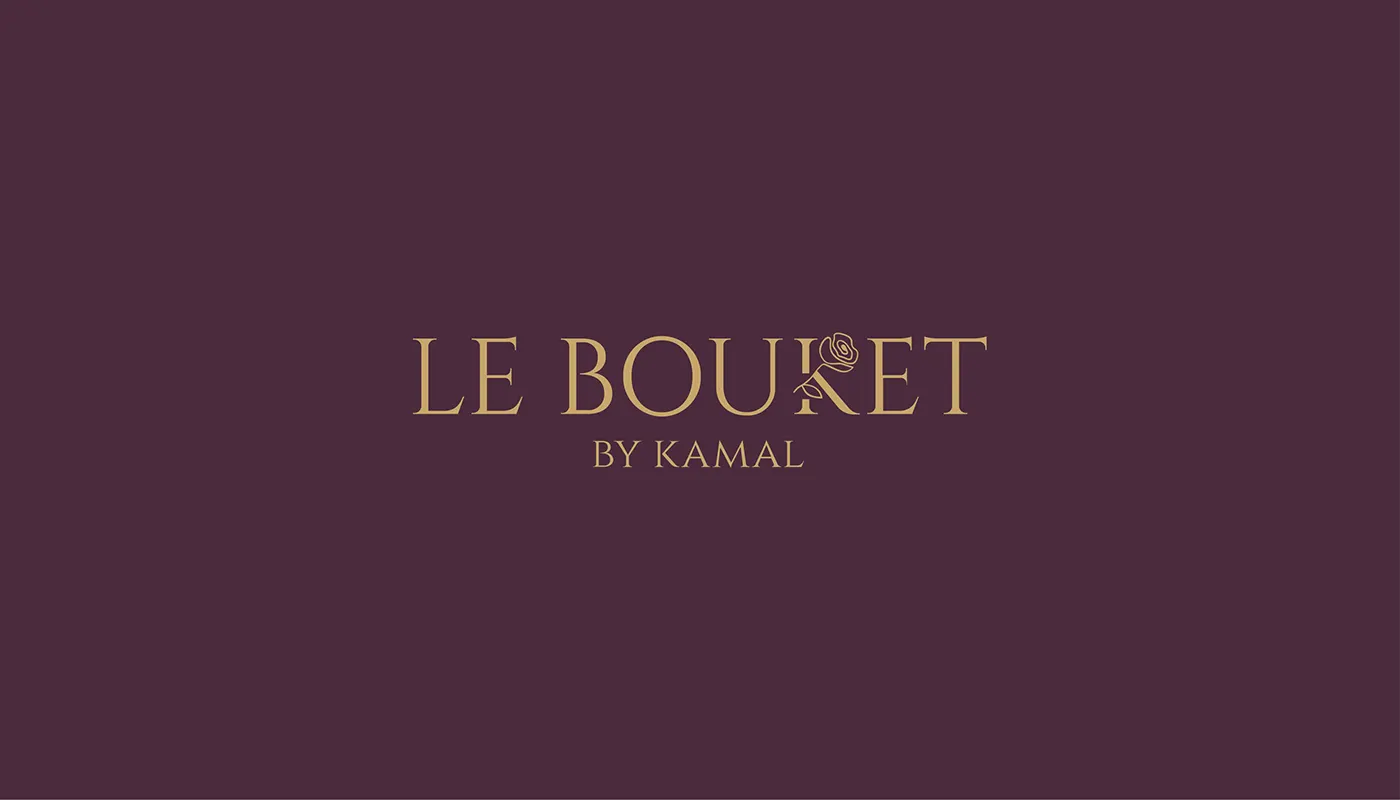
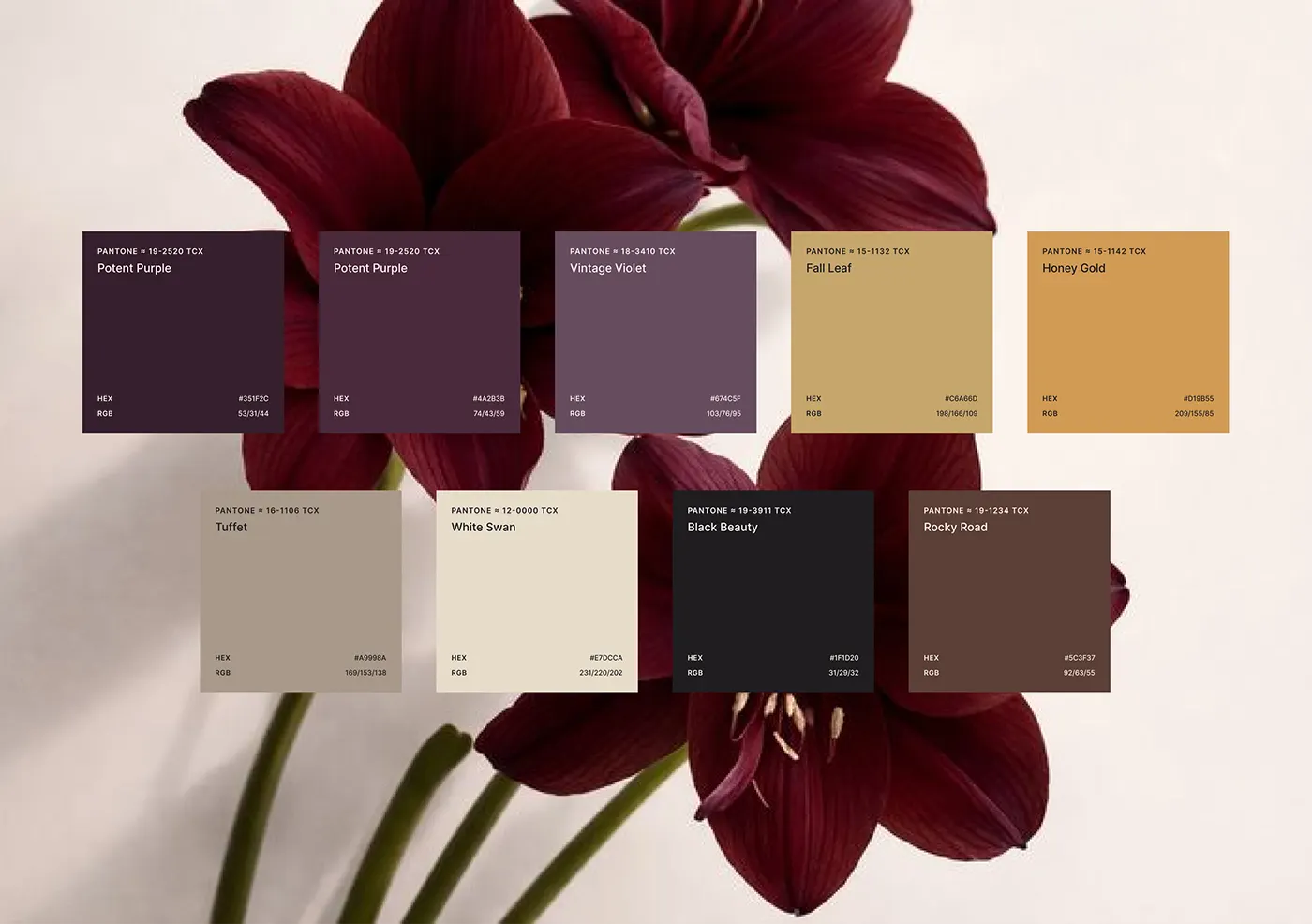
The identity uses a serif wordmark with a K and rose monogram and a round seal. The palette is deep plum and violet with two soft golds, and Canela sets the headlines with Graphik for body text. That gives the brand restraint and warmth at the same time.
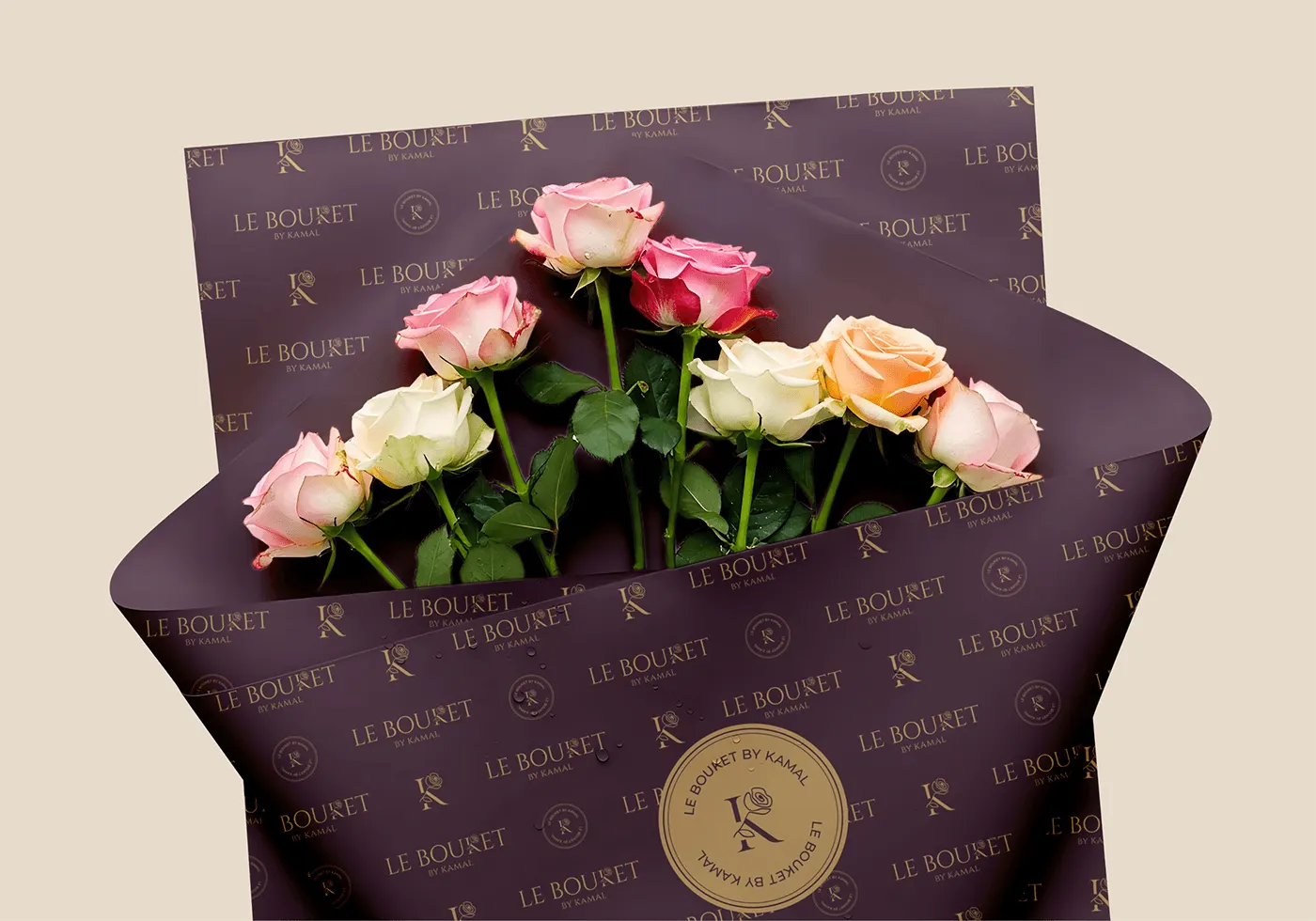
The craft shows in the applications: patterned wrapping paper, flower cones, a hat box, a gold wax seal, ribbon, aprons, a hanging shop sign and a flower cart. See the full Le Bouket luxury brand identity case study. The Le Bouket packaging design shows the box system behind it.
More luxury branding examples from my work: Goldmark luxury brand identity, Lacio luxury lifestyle brand and FOREON luxury golf club branding.
How to build a luxury brand identity in 7 steps
- Define who you serve. Describe your best customer, what they already buy and why they would choose you.
- Write the story. Two or three sentences on why the brand exists and what makes it rare.
- Set the position. Decide if you are luxury, premium or accessible luxury, and price to match. See how to write a brand positioning statement.
- Design the core identity. A wordmark, a monogram or seal, a small palette and two typefaces.
- Design the touchpoints people hold. Packaging, cards, bags and labels, then the website and social media.
- Write the guidelines. Rules for logo, colour, type, photography and voice, so every partner keeps the brand consistent.
- Design the experience. Plan the moment of buying, delivery and unboxing, and review it every few months.
Common luxury branding mistakes
- Copying big fashion houses. Black, gold and a thin serif alone feel generic. Start from your own story.
- Raising prices without raising value. In 2027 buyers check whether the price is earned.
- A beautiful logo with cheap packaging. The packaging is often the first thing people touch.
- Too many discounts. Frequent sales teach buyers to wait and weaken the brand.
- Inconsistent details. Different fonts, colours or tones across channels break the feeling of quality.
How much does luxury branding cost?
Luxury branding costs depend on scope more than on the word luxury. A logo and starter kit can cost a few hundred to a few thousand dollars with a freelancer or specialist designer, a full brand identity with packaging and guidelines usually costs several thousand dollars, and luxury agencies often charge tens of thousands or more. Packaging production, special print finishes and photography are extra.
My prices are fixed in US dollars: the Launch plan at $799 one time covers a logo, brand starter kit and one landing page, and a full luxury brand identity with guidelines, packaging and website design sits in the Partner plan at $1,999 per month. For full market ranges, read the brand identity design cost guide for the USA and how much branding costs in the UK.
Luxury branding for the USA, UK, Australia and Norway
I work remotely with luxury and premium brands in the USA, UK, Australia and Norway, with calls in your time zone and a written brief before any design starts. For packaging led brands, see packaging design, or the full brand identity design service.
Research and sources
- Bain & Company and Altagamma, Luxury Goods Worldwide Market Study, 2025 edition, as reported by FashionUnited.
- BCG and Altagamma, True-Luxury Global Consumer Insights 2026, as summarised by IADS.
- Le Bouket brand identity by Jakaria Mahmud on Behance.
Planning boxes or bags for a premium product? See how much packaging design costs in 2027.
Luxury brands I designed: Le Bouket, Goldmark and Lacio.
The takeaway
Luxury branding in 2027 is less about looking expensive and more about proving value. Start with a real story, keep the identity restrained, put craft into the things people touch and keep every detail consistent. Do that, and people will pay more and tell others about you.
Building a luxury or premium brand? See my brand identity design work, the Le Bouket case study, or book a free 30 minute call.
Frequently asked questions
Luxury branding is the strategy, identity and experience that make people see a brand as rare, beautiful and worth paying more for. It covers the brand story, positioning, logo, colour, typography, packaging, the shopping experience and the brand voice, all kept consistent.
Define who you serve, write a short brand story, set a clear luxury or premium position, then design a refined wordmark or monogram, a small deep colour palette, elegant typography and premium packaging. Finish with brand guidelines and a thoughtful buying and unboxing experience.
Luxury brands usually use two or three deep colours, such as black, navy, plum or forest green, with one rich accent like gold, bronze or cream. A small palette looks confident and keeps every touchpoint consistent.
Most luxury brands pair an elegant serif for headlines, such as Canela or a classic Didone style, with a clean sans serif for body text. The serif adds character and the sans serif keeps small text easy to read.
A premium brand is a better version of an everyday product, sold on quality. A luxury brand is bought for its own sake, for heritage, craft, beauty or status, and its identity is more restrained and story led.
A luxury logo and starter kit can cost a few hundred to a few thousand dollars, a full luxury brand identity with packaging and guidelines usually costs several thousand dollars, and agencies often charge tens of thousands. Jakaria Mahmud's Launch plan is $799 and a full brand sits in the $1,999 per month Partner plan.