Branding · 3 min read
Personal branding is not posting more. It is positioning better.
Posting every day will not fix a personal brand nobody can describe. Positioning will. Here is a five step framework to become the obvious choice for the clients you actually want.

Jakaria MahmudBrand identity and UI/UX designer ·
The most common personal branding advice is to post more. Post every day, on every platform, and eventually people will notice. For most founders and freelancers that advice produces burnout, not clients. The problem is rarely volume. It is that nobody can describe what you do in one sentence.
A strong personal brand is a positioning decision first and a content habit second. When people can say "if you need X, talk to them", posting starts to compound. When they cannot, more posts just add noise.
Why posting more usually fails
- Too broad. "I help businesses grow" gives nobody a reason to remember you.
- No point of view. Summarising what everyone else says makes you interchangeable.
- No path to work. Followers who like your posts still do not know how to hire you.
- Inconsistent look and message. Every profile tells a slightly different story.
A five step personal brand positioning framework
1. Choose who you are for
Pick a specific audience you understand and want to work with: early stage SaaS founders, healthcare startups, service businesses that sell to other businesses. Narrow feels risky, but it is what makes you memorable. You can still accept work outside it.
2. Own one problem
Define the problem you solve in the words your audience uses. My own version is simple: most founders do not have a design problem, they have a selling problem. One sentence like that does more than a list of ten services.
3. Develop a point of view
What do you believe about your field that others get wrong? A clear point of view gives people something to agree or disagree with, and that is what makes content spread. Mine comes from sales: understand the sale first, design second, then measure.
4. Collect proof
Results, case studies, recommendations and reviews turn claims into credibility. Ask happy clients for a short recommendation on LinkedIn or a Google review while the project is fresh, and show them where people decide, on your website and profiles.
5. Make it consistent everywhere
Your website, LinkedIn headline, Behance, Dribbble and Google profile should tell the same story with the same visual identity. Consistency is what turns scattered impressions into a recognisable brand. This is where personal branding and brand identity design meet: a clear message deserves a look that matches it.
The one sentence test. Complete this: "I help [specific audience] get [specific result] by [how you do it]." If you cannot fill it in without hedging, fix the positioning before you plan a single post.
Then, and only then, create content
With positioning in place, content gets easier because every post has a job. A simple mix works well:
- Teach: practical lessons your audience can use today.
- Show: real work, process and before-and-after results.
- Believe: your point of view on how things should be done.
- Invite: a clear, low-pressure way to work with you.
Post at a pace you can sustain for a year. Consistent and clear beats frequent and forgettable.
The personal brand assets that matter most
- A website that states who you help, shows proof and makes booking easy.
- Profile headlines that repeat the same positioning sentence.
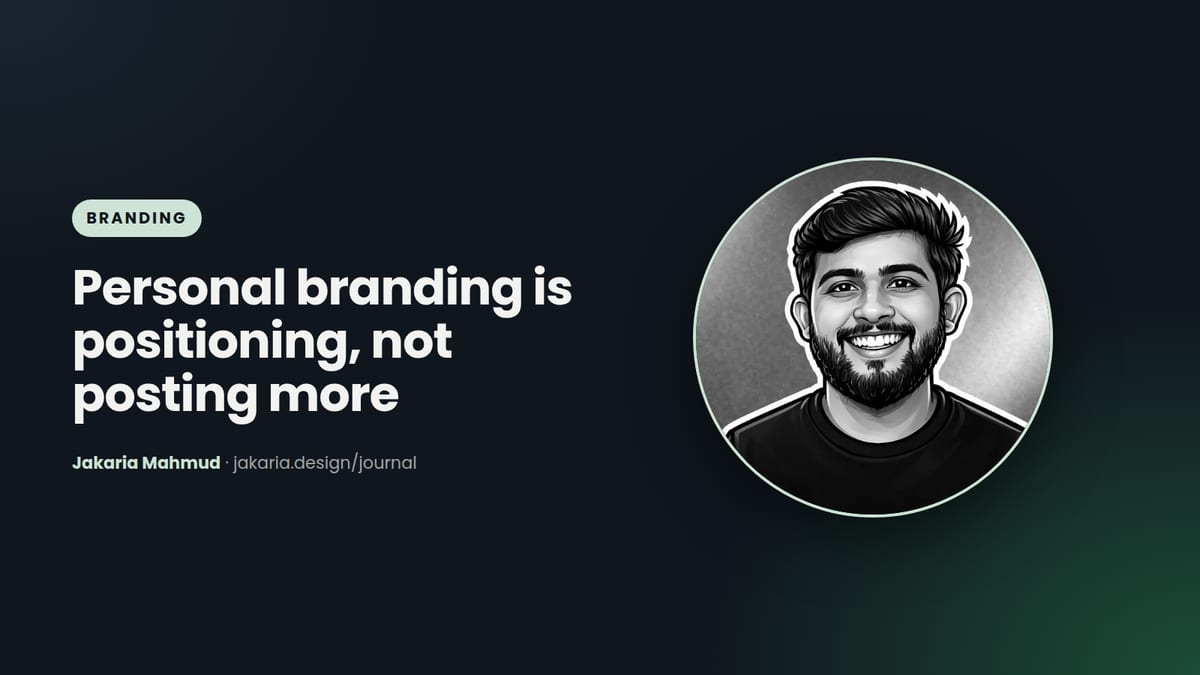
- A simple visual identity: a good photo or illustrated portrait, a colour, a typeface.
- A Google Business Profile with genuine reviews, so people searching your name find the right you.
The takeaway
Personal branding is not a volume game. Decide who you are for, own one problem, hold a point of view, collect proof and make it consistent everywhere. Then post at a pace you can keep. That is how you become the obvious choice instead of one more voice in the feed.
Frequently asked questions
Personal branding is how people describe you when you are not in the room: who you help, what problem you solve and why they should trust you. It is built through positioning, proof and consistency, not just content.
Choose a specific audience, own one problem in their words, develop a clear point of view, collect proof such as reviews and results, and keep the same message and look across every profile.
At a pace you can sustain for a year. Consistent, clearly positioned posts compound more than frequent posts without a clear message.
Yes. Social platforms change, but your website is where you control the message, show proof and make it easy to book a call.