Branding · 8 min read
Real estate branding: how to build a property brand people trust and remember
In real estate, most clients arrive through referrals and past relationships, so people must remember your name and trust it on sight. Here is how to build a property brand that does both, from the logo on the sign to the listing template.

Jakaria MahmudBrand strategist and brand identity designer ·
Real estate branding is the system that makes an agent, brokerage, developer or property platform recognisable and trusted: a clear position, a name and logo that read instantly on a sign or an app icon, one owned colour, consistent listing and social templates, and a voice that sounds the same in every conversation. It matters because most property business comes from people who remember you. In the USA, 43% of recent buyers found their agent through a referral and 66% of sellers found theirs through a referral or past work.
I am Jakaria Mahmud, a senior brand identity designer and brand consultant working with founders and property businesses in the USA, UK, Europe and Australia. This guide covers what a real estate brand needs, where it has to work and how to build one without wasting budget.
Short answer. Pick who you serve, then build a simple, bold identity that works on a for sale sign, a listing photo, a phone screen and a business card. Use one colour you can own in your market, templates for every listing and post, and short guidelines so every agent and office looks the same. Consistency is what turns one good deal into referrals.
Why branding matters so much in real estate
Property is a trust business. People hand you the biggest purchase of their lives, then recommend you to friends for years afterwards. The data from the National Association of Realtors' 2025 Profile of Home Buyers and Sellers shows how much depends on being remembered:
| Finding (USA, 2025) | Share | What it means for your brand |
|---|---|---|
| Buyers who used an agent or broker | 88% | The agent is still the main touchpoint, so the agent brand matters |
| Buyers who found their agent through a referral | 43% | People must remember and spell your name after one conversation |
| Buyers who used an agent they had worked with before | 18% | Your brand has to stay visible between deals |
| Sellers who found their agent through a referral or past work | 66% | Signs, listings and follow ups are long term brand building |
| Buyers who would use their agent again | More than 9 in 10 | Good service earns loyalty, a strong brand makes it easy to act on |
A clear brand does not replace good service. It makes good service easier to remember, recommend and find again. For the wider link between brand and revenue, read how branding increases sales.
Who needs real estate branding
- Independent agents and realtors: a personal brand that works inside the rules of the brokerage. See personal branding.
- Brokerages and agencies: one system that dozens of agents can use without breaking it.
- Property developers: a master brand plus project brands for each development, with hoardings and sales suites.
- Property managers and lettings: a calm, reliable identity for landlords and tenants, often with a portal or app.
- Proptech platforms: a product brand that works as an app icon and in the interface. See startup branding.
The elements of a strong real estate brand
- Positioning: who you serve and why you are different, for example first time buyers in one city, luxury homes or commercial property. Start with a brand positioning statement.
- Name: short, easy to say on the phone and easy to remember after one meeting.
- Logo: bold and simple enough to read on a sign from across the street and as a small app icon. Avoid generic roofs and keys that every competitor uses. See types of logos.
- Colour: one colour you can own in your local market, plus neutrals for listings. See how to choose brand colors.
- Typography: a clear typeface for prices, addresses and specs, so listings are easy to scan.
- Photography style: rules for light, angles and editing so every listing looks like it came from the same company.
- Voice: how you write listings, emails and posts: calm and expert, warm and local, or premium and precise.
- Templates and guidelines: listing sheets, social posts, signs and email signatures that any agent can use. See the brand guidelines checklist.
Where a real estate brand has to work
| Touchpoint | Design rule |
|---|---|
| For sale and to let signs | High contrast, few words, logo and phone readable from a moving car |
| Listing photos and portals | Consistent photo style and a clean listing template; portals limit how much branding you can add |
| Website and app | Fast search, clear prices and a mark that works as a favicon and app icon |
| Google Business Profile | Same name, logo, colours and photos as everywhere else |
| Social media | Templates for just listed, sold, open house and market updates |
| Print and office | Business cards, brochures, folders, window displays and office signage |
| Developments | Hoardings, sales suites and project microsites that sit under the master brand |
Case study: ZREX real estate brand identity
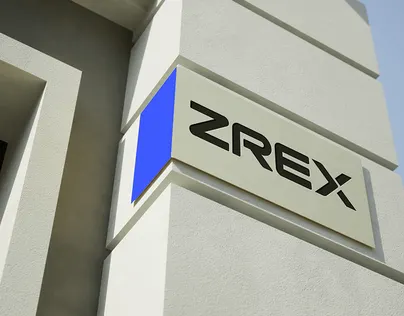
ZREX is a modern real estate platform built around one idea: The Better Property Network. I designed an identity with an arrow inspired X for forward movement, bold Sohne typography and a palette of Spectrum Blue, Porcelain, Lavender and Jet Black.
The system runs from the app icon and website to building signs, bus shelter posters, hoarding billboards, business cards, letterheads and merchandise, with brand guidelines and animated logo reveals. One owned blue and one simple symbol make it recognisable on a phone and on the front of a building. See the full ZREX real estate brand identity case study.
Personal agent brand or brokerage brand?
Most agents work under a brokerage, so the personal brand has to sit alongside the company brand, not compete with it. In the USA most states require the brokerage name to appear in agent advertising, so check your state's rules and your brokerage policy before you design. A good approach is a simple personal mark or wordmark, the brokerage logo in a fixed position and shared colours or type where the brokerage allows it. Read personal branding for founders for the positioning side.
Real estate branding in the USA, UK and Australia
- USA: brokerage name rules, MLS and portal photo policies and a trademark search for the name. See brand identity design cost in the USA.
- UK: estate agents compete on portals and high street boards, so the board design and the listing template carry most of the brand. See branding costs in the UK.
- Australia: signboards, auction marketing and portal listings dominate, and prices are often quoted in AUD with GST. See branding costs in Australia.
This is general guidance, not legal advice. Check local advertising rules with your brokerage, regulator or lawyer.
Common real estate branding mistakes
- Roof, key and house icons that look like every other agency in town.
- Thin, detailed logos that disappear on a sign or a phone screen.
- A different colour and template for every listing or agent.
- A personal brand that ignores brokerage rules and has to be redone.
- No guidelines, so the brand drifts as the team grows.
How much does real estate branding cost?
A logo alone can cost a few hundred dollars, while a full identity with guidelines, signage, listing templates and a website usually costs a few thousand with an experienced freelancer and much more with an agency. Full price ranges by market are in the USA cost guide, the UK cost guide and the Australia cost guide.
My pricing is public: the Launch plan is $799 one time for a logo, brand starter kit and one landing page, and full brand identity with guidelines and website sits in the Partner plan at $1,999 per month.
How to build a real estate brand, step by step
- Audit: collect your signs, listings, website and social posts and see what is inconsistent. Use the brand audit checklist.
- Position: choose who you serve and the one thing you want to be known for.
- Design: logo, colour, type and photo style, tested on a sign, a listing and an app icon first.
- Templates: listing sheets, social posts, signs and email signatures.
- Guidelines: short rules every agent and supplier can follow.
- Roll out: replace signs and templates in one planned wave, not piece by piece.
A typical identity takes three to five weeks. See the brand identity design timeline.
The takeaway
In real estate, your brand works hardest between deals: on the sign people drive past, the listing they share and the name they recommend. Choose who you serve, design a simple mark and one owned colour, give every agent templates and guidelines, and keep it consistent for years. That is how a property brand turns good service into referrals.
If you want a real estate brand built this way, see how I work on brand identity design and brand strategy, look at the recent work or book a free 30 minute call.
Sources: buyer and seller figures from the National Association of Realtors 2025 Profile of Home Buyers and Sellers, as summarised by Virginia REALTORS.
Frequently asked questions
Real estate branding is the system that makes an agent, brokerage, developer or property platform recognisable and trusted. It covers positioning, name, logo, colour, typography, photography style, voice, listing and social templates and brand guidelines.
Most real estate business comes from people who remember you. In the USA, 43% of recent buyers found their agent through a referral and 66% of sellers found theirs through a referral or past work, according to NAR's 2025 Profile of Home Buyers and Sellers. A clear brand makes you easy to remember and recommend.
A good real estate logo is bold and simple enough to read on a sign from a moving car and as a small app icon. It avoids generic roof, key and house icons, uses one owned colour and works in one colour for print and engraving.
Yes, if it fits inside brokerage rules. Most US states require the brokerage name in agent advertising, so use a simple personal mark alongside the brokerage logo and check your brokerage policy first.
A logo alone can cost a few hundred dollars. A full identity with guidelines, signage, listing templates and a website usually costs a few thousand dollars with an experienced freelancer and more with an agency. Jakaria Mahmud's Launch plan starts at $799.
There is no single best colour. Choose one colour you can own in your local market, check what competitors already use, and pair it with neutrals that keep listing photos clean. Blue suggests trust, green growth and deep tones premium property.
Jakaria Mahmud is a senior brand identity designer and brand consultant at jakaria.design who designs real estate and proptech brands, such as the ZREX real estate brand identity, for clients in the USA, UK, Europe and Australia.