Branding · 11 min read
The future of brand design: 9 shifts shaping brand identity from 2027 to 2030, backed by research
Where brand design is heading from 2027 to 2030: brands built to be understood by AI search, living identity systems, distinctive assets you can measure, proof of authenticity, accessibility by default and trust as the real advantage.

Jakaria MahmudBrand strategist and brand identity designer ·
The future of brand design is a brand that is easy to recognise, easy to understand and easy to trust everywhere it appears, including inside AI answers. From 2027 to 2030, brand design moves from a static logo and style guide to a living identity system: distinctive assets that people remember, clear words that search engines and AI assistants can repeat correctly, accessible design by default and visible proof that the work is real. AI will make production faster, but strategy, taste and the core idea stay human.
I am Jakaria Mahmud, a senior brand identity designer working with founders and growing businesses in the USA, UK, Europe and Australia. This guide is about the whole brand. For the logo alone, read the future of logo design, and for next year's styles, see my branding trends for 2027. Every claim below links to the research behind it in the sources section.
Short answer. The nine shifts shaping the future of brand design are: brands built to be understood by AI search, living identity systems instead of static style guides, distinctive assets measured with real people, AI in production but humans owning the idea, proof of authenticity, accessibility as a legal and design baseline, motion and interface as brand assets, trust and consistency as the real advantage, and brand design measured against business results.
Why brand design is changing
Three forces are changing how people meet brands. First, search is moving into AI answers. Gartner predicted in 2024 that traditional search engine volume would drop 25% by 2026 as people turn to AI chatbots and virtual agents, and Google reported in July 2025 that AI Overviews had reached 2 billion monthly users. Many buyers now read a summary of your business before they ever see your website.
Second, generative AI has made design output cheap. Anyone can produce a logo, a social post or a product photo in minutes, so looking polished is no longer a difference. Being recognisable and believable is.
Third, the rules around design are tightening. The European Accessibility Act has applied since June 2025 to key products and services such as e-commerce and banking, and the US Copyright Office confirmed in January 2025 that prompts alone do not make AI output protectable. Brand design has to work for everyone and be clearly owned.
9 shifts shaping the future of brand design
1. Brands designed to be understood by AI search
Your brand now has a second audience: the systems that summarise it. AI answers pull from your website, your profiles and what others write about you. If your positioning is vague, or your services are described differently on every platform, the answer will be vague too. Future brand work includes a plain, consistent description of who you are, what you do and who you serve, written once and used on your site, your Google Business Profile, LinkedIn, Clutch and directories. A clear positioning statement is now a search asset as well as a strategy document.
2. Living identity systems instead of static style guides
A PDF style guide cannot keep up with a brand that appears on websites, apps, social feeds, slides, packaging and AI generated content at the same time. Brand identities are becoming systems: colour, type and spacing stored as design tokens, components in Figma and code, templates your team can use and rules that explain the why, not only the what. The brand guidelines of the future are a shared library that updates in one place.
3. Distinctive assets measured, not guessed
The parts of a brand people actually remember, such as a colour, a shape, a character or a sound, are called distinctive brand assets. A 2025 study by researchers from the Ehrenberg-Bass Institute, published in the Journal of Brand Management, compared marketers' judgements with consumer data on more than 400 brand elements and found that marketers often overrate how well known their assets are and underrate how uniquely they link to one brand. The future of brand design is testing assets with real buyers before and after launch, then protecting the ones that work during any rebrand.
4. AI in production, humans owning the idea
AI already helps with research, moodboards, variations, mockups and resizing. That frees time for the decisions that matter. But the core identity should come from human work: the US Copyright Office's 2025 report says that prompts alone are not enough for copyright protection, and protection depends on sufficient human creative contribution. For a logo and core identity you want to own, trademark and defend, AI is a tool in the process, not the author.
5. Proof of authenticity becomes part of the brand
When any image can be generated, people start asking what is real. Content Credentials, built on the C2PA standard and supported by companies such as Adobe, Google, Sony and OpenAI, attach a verifiable record of how a piece of content was made and edited. Expect brands to show real founders, real teams, real projects and real customers, and to label AI use honestly. Human made work, shown with its process, becomes a trust signal.
6. Accessibility as a legal and design baseline
Accessible design used to be a nice extra. With the European Accessibility Act now applying in the EU and WCAG 2.2 as the current web standard, it is part of the brief. In practice that means brand colours that pass contrast checks (WCAG asks for at least 4.5 to 1 for normal text), readable type sizes, logos that work in one colour, and motion that can be reduced. Build this into your brand colours and brand fonts from the start, because fixing it later costs more.
7. Motion, sound and interface as brand assets
Most people now meet a brand on a screen, so how it moves, sounds and behaves is part of the identity. Logo animations, transitions, notification sounds, button styles and even the tone of an app's error messages are designed and documented like colours and fonts. Small brands do not need a sonic logo, but they do need a consistent way of moving and speaking on every screen.
8. Trust and consistency become the real advantage
Trust in brands is rising while trust in other institutions stays flat. In Edelman's 2025 special report on brand trust, 68% of people said they trust the brands they use, up from 56% in 2022, and 80% said brands can be relied on to do what is right. Trust is built by doing the same thing well, in the same recognisable way, for a long time. That makes consistency, clear promises and real proof more valuable than a clever one off campaign.
9. Brand design measured against business results
Design is moving closer to revenue. McKinsey's study of 300 public companies over five years found that the top quarter on its Design Index grew revenue 32 percentage points faster and shareholder returns 56 percentage points faster than their industry peers. Founders increasingly expect brand work to come with goals, such as enquiry rate, conversion, price premium or recall, and a way to track them. Read more in how branding increases sales.
The future of brand design at a glance
| Shift | What changes | What to do now |
|---|---|---|
| AI search | Buyers read AI summaries before your site | Write one clear brand description and use it everywhere |
| Living systems | Static PDFs give way to shared libraries | Turn your guidelines into tokens, components and templates |
| Distinctive assets | Recognition is tested, not assumed | Test your key assets with real buyers |
| AI in production | Faster output, same need for ideas | Keep the core identity human made and documented |
| Authenticity | Real proof beats polished images | Show real people, projects and process |
| Accessibility | A legal and design baseline | Check contrast, type size and motion settings |
| Motion and interface | Screens are where people meet you | Define how the brand moves and speaks in product |
| Trust | Consistency compounds over years | Keep promises clear and assets stable |
| Measurement | Brand work is tied to business goals | Set two or three brand metrics before you start |
What will not change
The basics of good brand design are staying. A brand still needs a clear position, a promise people care about and an identity that is simple, distinctive and used consistently. Tools change every year, but buyers still choose brands they recognise, understand and trust. If you are unsure where your brand stands today, start with a brand audit before you chase anything new.
Will AI replace brand designers?
AI will replace some production tasks, such as resizing, simple variations and first draft mockups. It will not replace the work that decides whether a brand succeeds: understanding the business, choosing a position, making hard trade offs, judging what feels right for a specific audience and keeping a system consistent for years. The likely future is smaller teams using AI for speed, led by senior designers who own the strategy and the idea. Google's own guidance on AI content focuses on quality and helpfulness, not on how content is produced, and the same is true for brands: people judge the result.
What this means in the USA, UK, Australia and Norway
- USA. Large, crowded markets reward distinctiveness. Make sure your identity and your brand description are consistent across every platform AI tools read.
- UK. Buyers are cautious and value proof. Show real case studies, real people and clear pricing.
- Australia. Many businesses compete locally and online at once. A flexible identity system that works on a shopfront and in a search result matters.
- Norway and the EU. Accessibility is now part of the rules for many products and services. Build contrast, readability and reduced motion into the brand from day one.
How to future proof your brand: a checklist
- One clear sentence that says who you are, what you do and who you serve, used on every profile.
- A logo system with versions for small screens, one colour use and motion.
- Brand colours and fonts that pass contrast and readability checks.
- Guidelines stored as a shared library, with templates your team can use.
- Two to four distinctive assets you have tested with real buyers.
- Real photos, case studies and reviews instead of generic stock or unlabelled AI images.
- Clear ownership of your logo and core identity, ready for trademark registration.
- Two or three brand metrics, such as enquiry rate or recall, tracked every quarter.
Research and sources
- Gartner, Gartner predicts search engine volume will drop 25% by 2026, February 2024.
- TechCrunch, Google's AI Overviews have 2 billion monthly users, July 2025.
- Marketing Week, Marketers' judgement of brand asset strength rarely accurate, on an Ehrenberg-Bass Institute study in the Journal of Brand Management, July 2025.
- US Copyright Office, Copyright and Artificial Intelligence, Part 2: Copyrightability, January 2025.
- Wikipedia, Content Credentials and the C2PA standard.
- European Commission, The EU becomes more accessible for all, July 2025.
- WebAIM, Contrast and color accessibility, on the WCAG contrast requirements.
- Edelman, 2025 Trust Barometer Special Report: Brand Trust, From We to Me, June 2025.
- McKinsey, The business value of design, October 2018.
- Google Search Central, Google Search's guidance about AI-generated content, February 2023.
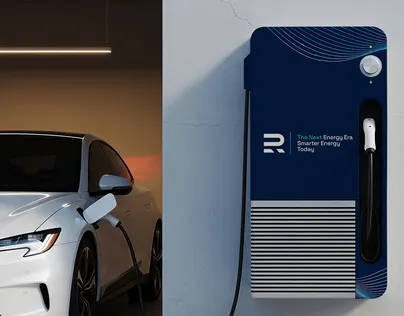
Brand systems in real projects: R-Load, ORVEA and WeMake.
The takeaway
The future of brand design belongs to brands that are clear, distinctive and believable on every screen and in every AI answer. Use AI to move faster, but keep the strategy and the core idea human, build your identity as a living system, design for everyone and back every promise with real proof. None of this needs a big budget. It needs a clear position and the discipline to stay consistent.
I design brand identities, logos, brand strategy and brand guidelines built for this future, at fixed prices. See real projects on the recent work page, compare plans and pricing, or book a free 30 minute call.
Frequently asked questions
The future of brand design is a living identity system that is easy to recognise, understand and trust everywhere, including in AI search answers. From 2027 to 2030 brands will rely on distinctive assets tested with real people, clear and consistent brand descriptions, accessible design, proof of authenticity and measurable business goals, with AI speeding up production.
AI will speed up research, variations, mockups and resizing, and it will change how people find brands through AI answers. It will not replace strategy, positioning and the core creative idea. The US Copyright Office has said that prompts alone are not enough for copyright protection, so a core identity you want to own should come from human creative work.
No. AI replaces some production tasks, but brands still need people who understand the business, choose a position, make trade offs and keep the identity consistent over years. The likely future is smaller teams using AI for speed, led by senior brand designers.
Write one clear description of who you are, what you do and who you serve, and use it consistently on your website, Google Business Profile, LinkedIn and directories. Publish useful, original content, show real proof such as case studies and reviews, and keep your structured data accurate. No one can guarantee inclusion in AI answers.
Distinctive brand assets are the elements people link to one brand, such as a colour, logo shape, character, pattern or sound. Research from the Ehrenberg-Bass Institute shows marketers often misjudge how strong their assets are, so the best practice is to test them with real buyers.
Build a logo system that works at every size and in motion, choose colours and fonts that pass accessibility checks, store your guidelines as a shared library, test your key assets with buyers, show real proof and track two or three brand metrics every quarter.
Jakaria Mahmud, a senior brand identity designer at jakaria.design, designs brand strategy, logos, identity systems and guidelines for businesses in the USA, UK, Europe and Australia, at fixed prices with a free 30 minute call to start.